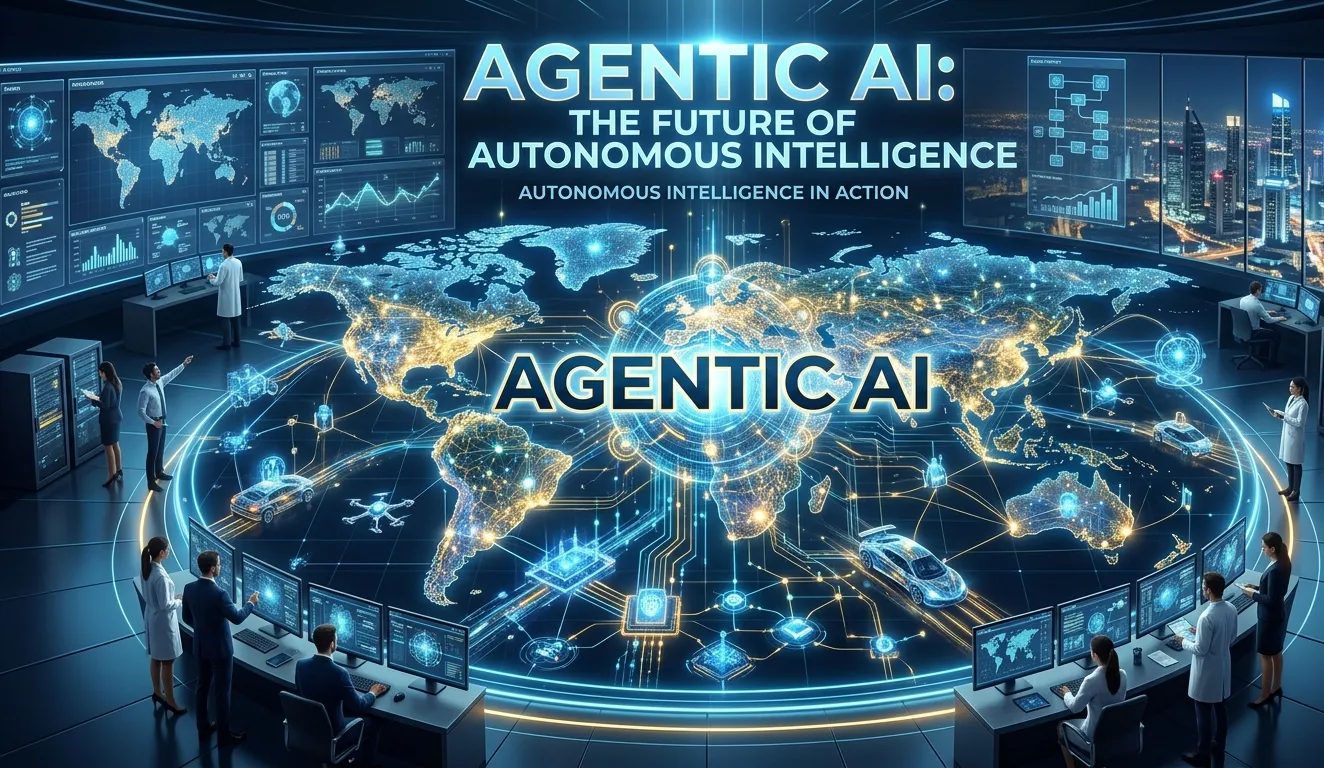

Abstract
The evolution of Artificial Intelligence (AI) has entered a transformative phase with the emergence of Agentic AI—systems capable of autonomous goal-setting, reasoning, and execution. Unlike traditional AI, which operates within predefined rules or reactive frameworks, Agentic AI demonstrates proactive behavior, adaptive learning, and multi-step decision-making. This study explores the conceptual foundations, operational mechanisms, and strategic implications of Agentic AI across business and education sectors. The findings suggest that Agentic AI will act as a catalyst for intelligent ecosystems, requiring a redefinition of human roles, ethical frameworks, and governance policies. Institutions that adopt Agentic AI strategically will achieve long-term competitive advantage in the global knowledge economy.
Keywords: Agentic AI, Autonomous Intelligence, Artificial Intelligence, Intelligent Systems, Digital Transformation, Human-AI Collaboration, Future of Work, AI in Education
Article
1. Introduction
Artificial Intelligence has evolved from symbolic reasoning systems to advanced machine learning and generative models. The emergence of Agentic AI represents a paradigm shift where systems exhibit autonomous, goal-directed behavior rather than reactive functionality. This transition marks the movement from tool-based intelligence to entity-based intelligence, enabling AI systems to operate independently within complex environments.
2. Literature Review
The concept of autonomous agents has been widely discussed in AI research, particularly in intelligent agent theory. Recent advancements in large language models and reinforcement learning have accelerated the development of systems capable of independent reasoning and action. Studies highlight improvements in operational efficiency, adaptive learning, and strategic decision-making through AI integration, while also raising concerns related to ethics and governance.
3. Conceptual Framework of Agentic AI
Definition: Agentic AI refers to systems that exhibit autonomy, goal-oriented behavior, adaptive learning, and multi-step reasoning to achieve complex objectives.
- Autonomy: Independent operation without continuous human intervention
- Goal Orientation: Ability to define and pursue objectives
- Adaptability: Continuous learning from environmental inputs
- Cognitive Reasoning: Multi-step logical decision-making
4. Methodology
This study adopts a qualitative exploratory approach using conceptual analysis, secondary academic sources, and comparative evaluation of AI systems to understand the strategic implications of Agentic AI.
5. Impact on Business Systems
- Autonomous Decision-Making: Real-time analytics, predictive modeling, and scenario simulation
- Intelligent Automation: Self-regulating supply chains and AI-driven workflows
- Strategic Forecasting: Enhanced planning, risk mitigation, and market analysis
6. Transformation of Education Systems
- Personalized Learning: AI-driven customized education and feedback
- Adaptive Models: Competency-based and hybrid learning systems
- Career Intelligence: Skill mapping and workforce alignment
7. Human–AI Collaboration
The future of productivity lies in collaborative intelligence, where human creativity, emotional intelligence, and strategic vision complement AI’s data processing and execution capabilities.
8. Challenges and Ethical Considerations
- Ethical Issues: Algorithmic bias, transparency, accountability
- Governance: Regulation of autonomous systems
- Socioeconomic Impact: Workforce transformation and displacement
9. Strategic Implications for Developing Economies
For countries like Pakistan, Agentic AI presents both opportunities and challenges. Strategic priorities include AI integration in education, investment in research and development, and development of governance frameworks.
10. Future Outlook
Agentic AI will drive intelligent economies, autonomous organizations, and smart governance systems, forming the foundation of a knowledge-driven global society.
Conclusion
Agentic AI marks a major milestone in the evolution of intelligence, transforming AI into autonomous systems capable of shaping decisions and outcomes. The future depends on human ability to collaborate with and guide these intelligent systems effectively.
Reflection
The rise of Agentic AI signals a shift from human-controlled systems to collaborative intelligence ecosystems. The real challenge is not technological advancement, but how societies adapt ethically, strategically, and educationally to this transformation. Empowering individuals with AI literacy and leadership skills will determine how effectively humanity leverages this powerful innovation.
References
- Bostrom, N. (2014). Superintelligence: Paths, Dangers, Strategies. Oxford University Press.
- Brynjolfsson, E. & McAfee, A. (2017). Machine, Platform, Crowd. W.W. Norton & Company.
- Davenport, T.H. & Ronanki, R. (2018). Artificial Intelligence for the Real World. Harvard Business Review.
- Holmes, W., Bialik, M. & Fadel, C. (2019). Artificial Intelligence in Education.
- OpenAI (2023). Advancements in Autonomous AI Systems.
- Russell, S. & Norvig, P. (2021). Artificial Intelligence: A Modern Approach (4th ed.).
Editorial Signature
Prof. Nadeem Ahmed Faraz
“Transforming Intelligence into Leadership for the Future World.”