
Abstract
Artificial Intelligence is transforming education, economies, and societies at an unprecedented pace. From voice assistants to personalized learning platforms, children are already interacting with AI daily. However, global research shows a critical gap between usage and understanding. According to UNESCO, fewer than 15% of countries have formally integrated AI into school curricula. Meanwhile, OECD has announced that AI literacy will be assessed in PISA 2029, signaling that AI competence is becoming a core global skill.
Article
Studies supported by UNICEF emphasize that without structured AI education, digital inequality will widen, especially in developing regions. Early AI literacy helps children understand algorithms, data, bias, and ethical use of technology. It strengthens critical thinking, creativity, and responsible innovation.
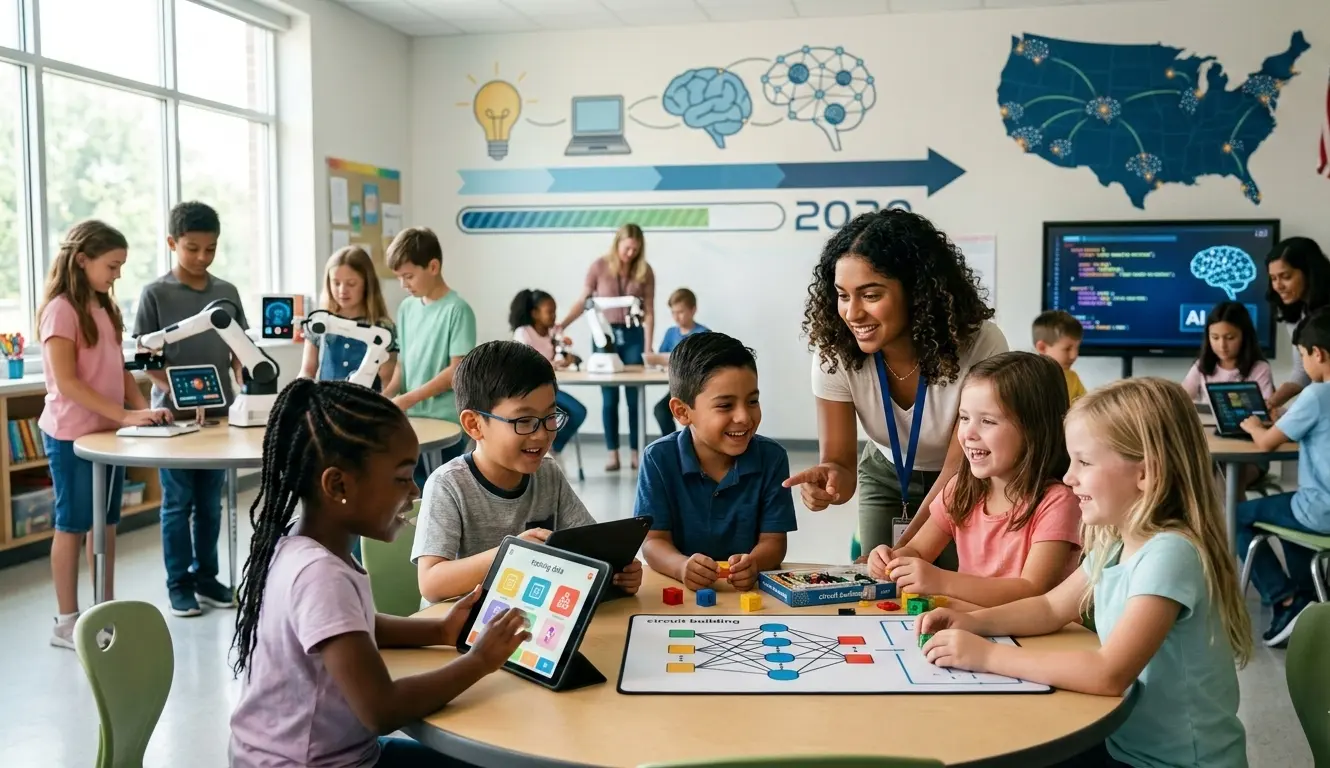
Introducing AI literacy from Grade 1 onward ensures age-appropriate progression—from understanding smart machines to coding, data science, and ethical AI leadership by secondary school.
To prepare future leaders for 2030 and beyond, schools must integrate AI awareness, teacher training, ethical guidelines, and project-based learning into national curricula. AI literacy is no longer optional—it is foundational for sustainable development and competitive global citizenship.
Reflection
AI literacy empowers students to become critical thinkers, responsible innovators, and active participants in a data-driven society. Its early introduction cultivates equity, ethical awareness, and the cognitive skills necessary to navigate complex technological and societal challenges in the coming decades.
References
- UNESCO (2023–2024) AI in Education Reports
- OECD PISA 2029 Framework
- UNICEF Digital Learning Strategy 2025–2030