
Beyond 2030: The Future of Health Management and Health Sciences Education in the Age of Artificial Intelligence, Precision Medicine, and Global Healthcare Transformation
Abstract
The healthcare industry is entering an unprecedented era of transformation characterized by Artificial Intelligence (AI), precision medicine, digital health ecosystems, biotechnology innovations, and data-driven healthcare management. As nations prepare for the post-2030 landscape, Health Management and Health Sciences Education will become strategic drivers of economic growth, healthcare sustainability, and human development. Future healthcare professionals will require a blend of scientific expertise, technological competence, leadership capabilities, and research excellence to address emerging global health challenges. This article explores the future scope, opportunities, and evolving significance of Health Management and Health Sciences Education beyond 2030.
Introduction
The world is witnessing a paradigm shift in healthcare delivery. Population growth, increased life expectancy, emerging diseases, climate-related health risks, and technological disruption are reshaping healthcare systems globally. According to the World Health Organization, healthcare workforce demand is expected to increase substantially over the coming decades. Consequently, educational institutions must redesign curricula to prepare graduates for a healthcare environment driven by innovation, digital transformation, and evidence-based decision-making.
Emerging Opportunities After 2030
The future of Health Management extends far beyond traditional hospital administration. Graduates will assume leadership roles in healthcare policy formulation, healthcare analytics, digital health governance, health informatics, healthcare entrepreneurship, and international healthcare consultancy.
Simultaneously, Health Sciences graduates will contribute significantly to genomics, regenerative medicine, biotechnology, telemedicine, epidemiology, preventive healthcare, and personalized medicine.
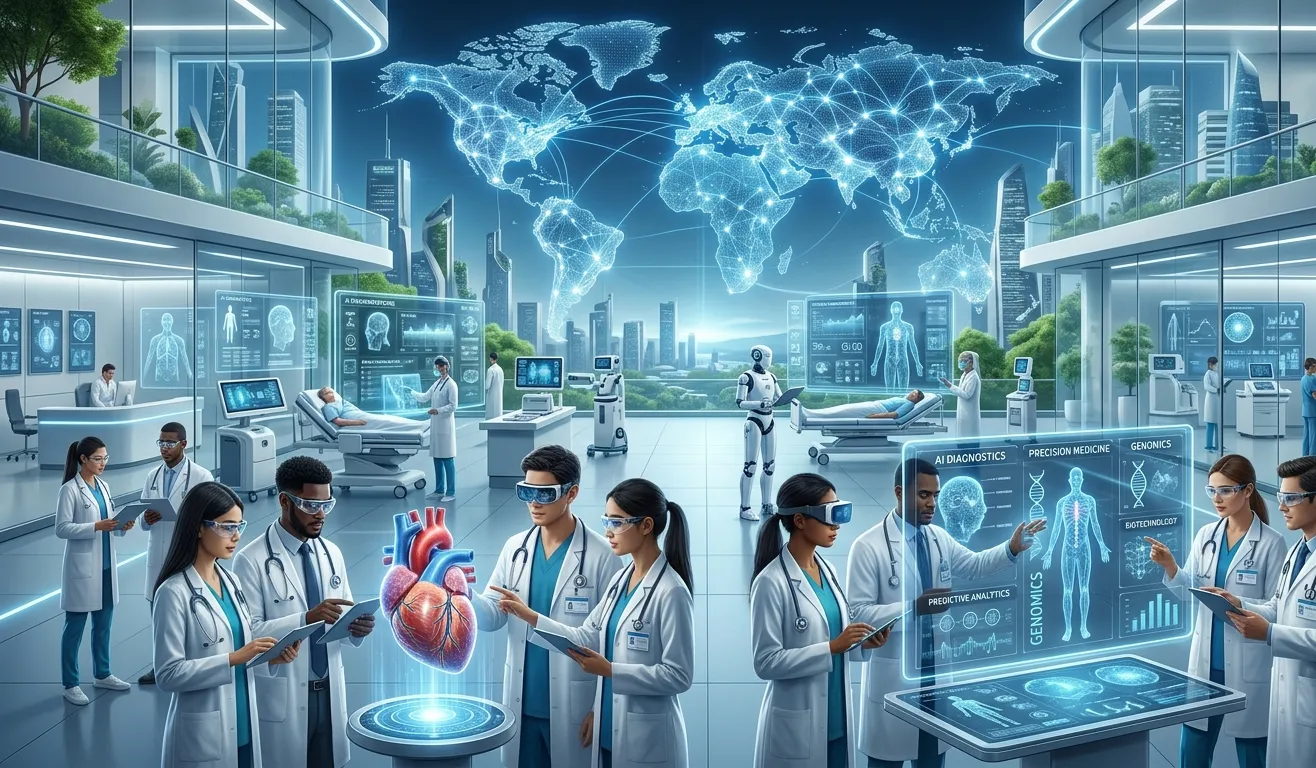
Artificial Intelligence will revolutionize diagnostics, patient monitoring, healthcare forecasting, and clinical decision-making. The integration of Big Data, Machine Learning, Robotics, Internet of Medical Things (IoMT), and Virtual Healthcare Platforms will create new professions that currently do not exist. Healthcare organizations will increasingly seek professionals capable of managing complex technological ecosystems while maintaining patient-centered care.
The Rise of Healthcare Leadership
Beyond technical expertise, future healthcare systems will require visionary leaders capable of managing change, innovation, and multidisciplinary teams. Health Management Education after 2030 must therefore emphasize strategic leadership, emotional intelligence, healthcare economics, crisis management, sustainability, and global health diplomacy.
Institutions that successfully integrate research, AI, innovation, entrepreneurship, and leadership development into healthcare education will become key contributors to national prosperity and global healthcare advancement.
Conclusion
The post-2030 era will belong to healthcare innovators, researchers, and strategic leaders who can leverage technology to improve healthcare accessibility, affordability, and quality. Health Management and Health Sciences Education will emerge as among the most influential and future-oriented academic disciplines, creating transformative opportunities for individuals, institutions, and nations.
Countries investing in next-generation healthcare education today will lead the global healthcare revolution tomorrow.
References
- World Health Organization (WHO). Global Strategy on Human Resources for Health: Workforce 2030.
- World Health Organization. Global Health Observatory Reports.
- United Nations. Transforming Our World: The 2030 Agenda for Sustainable Development.
- World Economic Forum. Future of Jobs Report.
- OECD. Health at a Glance: Global Health Indicators.
- The Lancet Commission. Future Health Systems and Digital Transformation.
- McKinsey & Company. The Future of Healthcare: Reinventing Care Delivery Beyond 2030.
- Harvard T.H. Chan School of Public Health. Digital Health and Future Healthcare Leadership Studies.