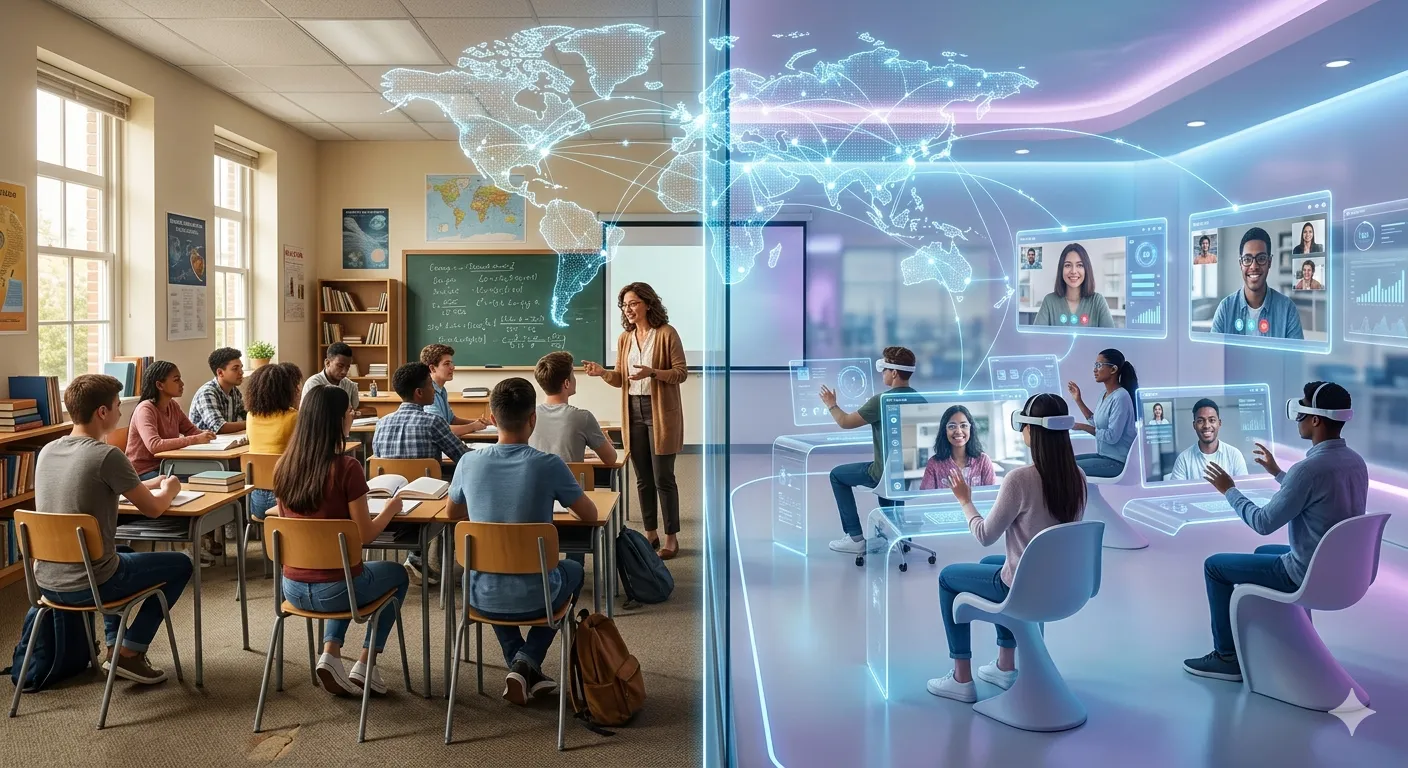

Borderless Learning in the Digital Age
The transformation of education in the 21st century reflects a paradigm shift from traditional classrooms to digitally enabled cloud-based learning environments. This paper examines the concept of borderless learning, where education transcends physical and geographical constraints. Drawing upon global frameworks, it highlights the role of emerging technologies in democratizing access, enhancing quality, and fostering global competencies. The study emphasizes the need for inclusive and policy-driven strategies to ensure equitable digital transformation in education.
Keywords: Borderless Learning, Cloudrooms, Digital Education, Global Learning, Artificial Intelligence, SDG 4
Introduction
Education systems worldwide are undergoing rapid transformation due to digitalization and globalization. The traditional classroom model, characterized by physical presence and standardized delivery, is increasingly inadequate in addressing the demands of a knowledge-driven economy. The emergence of cloud-based learning environments offers new opportunities for accessibility, flexibility, and innovation.
Literature and Policy Context
UNESCO (2021) highlights the need for a new social contract for education that promotes inclusivity and adaptability. Similarly, the United Nations Sustainable Development Goal 4 emphasizes equitable access to quality education. The OECD (2021) further underscores the importance of digital transformation in enhancing learning outcomes.
From Classrooms to Cloudrooms
The transition from classrooms to cloudrooms represents a fundamental shift in educational delivery. Cloudrooms provide virtual, learner-centered environments supported by artificial intelligence, cloud computing, and data analytics. These systems enable personalized learning, global collaboration, and continuous access to educational resources, thereby redefining the learning experience.
Discussion: Opportunities and Challenges
While digital transformation offers significant opportunities, challenges persist. The digital divide limits access in underserved regions, and concerns related to data privacy, quality assurance, and teacher preparedness remain critical. UNICEF (2022) emphasizes the importance of equity in digital learning initiatives. Addressing these challenges requires coordinated policy efforts and investment in infrastructure and capacity building.
Conclusion
Borderless learning represents the future of education. By leveraging cloud technologies and fostering global collaboration, education systems can transcend traditional boundaries. Strategic policies and inclusive practices are essential to ensure that this transformation benefits all learners.
References (APA Style)
- UNESCO. (2021). Reimagining our futures together: A new social contract for education.
- United Nations. (2015). Transforming our world: The 2030 agenda for sustainable development (SDG 4).
- OECD. (2021). Digital education outlook 2021.
- UNICEF. (2022). Remote learning and equity in education.