
PYEC Pakistan Young Entrepreneurs Club
Happy Pakistan Welfare Trust
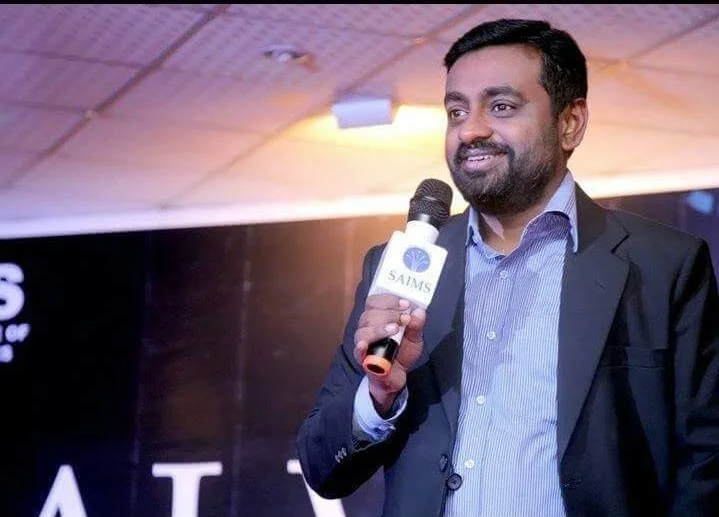
CEO Next Level Management Solutions
Convener Central Standing Committee on Research, Business Intelligence & Youth Policy – PAEC Pakistan Africa Economic Council
Head of Training & Policy Development – YCCP Youth Chamber of Commerce Pakistan
In the rapidly evolving knowledge economy, developing a mathematical mindset in schools has become a strategic necessity for enhancing students’ intellectual capacity, analytical reasoning, and overall IQ development. Mathematics is not merely a subject of numbers; it is a powerful cognitive training system that strengthens logical thinking, pattern recognition, and structured problem solving.
Global educational research consistently highlights that mathematical proficiency is closely linked with cognitive intelligence and academic success. According to cognitive science studies, the human brain develops stronger neural connections in regions responsible for reasoning and decision-making when engaged in mathematical problem solving. Early exposure to mathematical reasoning therefore plays a crucial role in shaping high-level thinking abilities and intellectual discipline.
Children possess a natural Approximate Number System (ANS) that enables them to perceive numerical relationships even before formal schooling. Strengthening this capacity through structured mathematics learning, puzzles, mental calculations, and analytical exercises significantly enhances cognitive development and intellectual performance.
For modern schools and parents, the goal should be to shift from rote memorization toward conceptual understanding, inquiry-based learning, and real-world problem solving. Integrating mathematical games, coding activities, logic puzzles, and data interpretation tasks can transform classrooms into intellectual laboratories of critical thinking.
By cultivating curiosity, perseverance, and analytical thinking through mathematics, schools can nurture a generation of high-IQ learners, innovative thinkers, and strategic leaders capable of navigating the complexities of the digital and AI-driven world beyond 2030.
References
- Dehaene, S. (2011). The Number Sense: How the Mind Creates Mathematics. Oxford University Press.
- OECD (2022). Global Competence and Cognitive Skills in Education.
- Boaler, J. (2016). Mathematical Mindsets. Stanford University.
- Scientific Reports (2024). Cognitive Predictors of Mathematical Achievement. Springer Nature.