
Abstract
Zimbabwe, a resource-rich Southern African economy, is undergoing a gradual macroeconomic stabilization supported by strong export-led recovery. With a population of approximately 17.4 million in 2025, projected to reach 19.3 million by 2030, the country presents emerging opportunities for strategic international partnerships. For Pakistan, Zimbabwe represents a high-potential frontier market for trade expansion, investment, and long-term economic collaboration.
Article
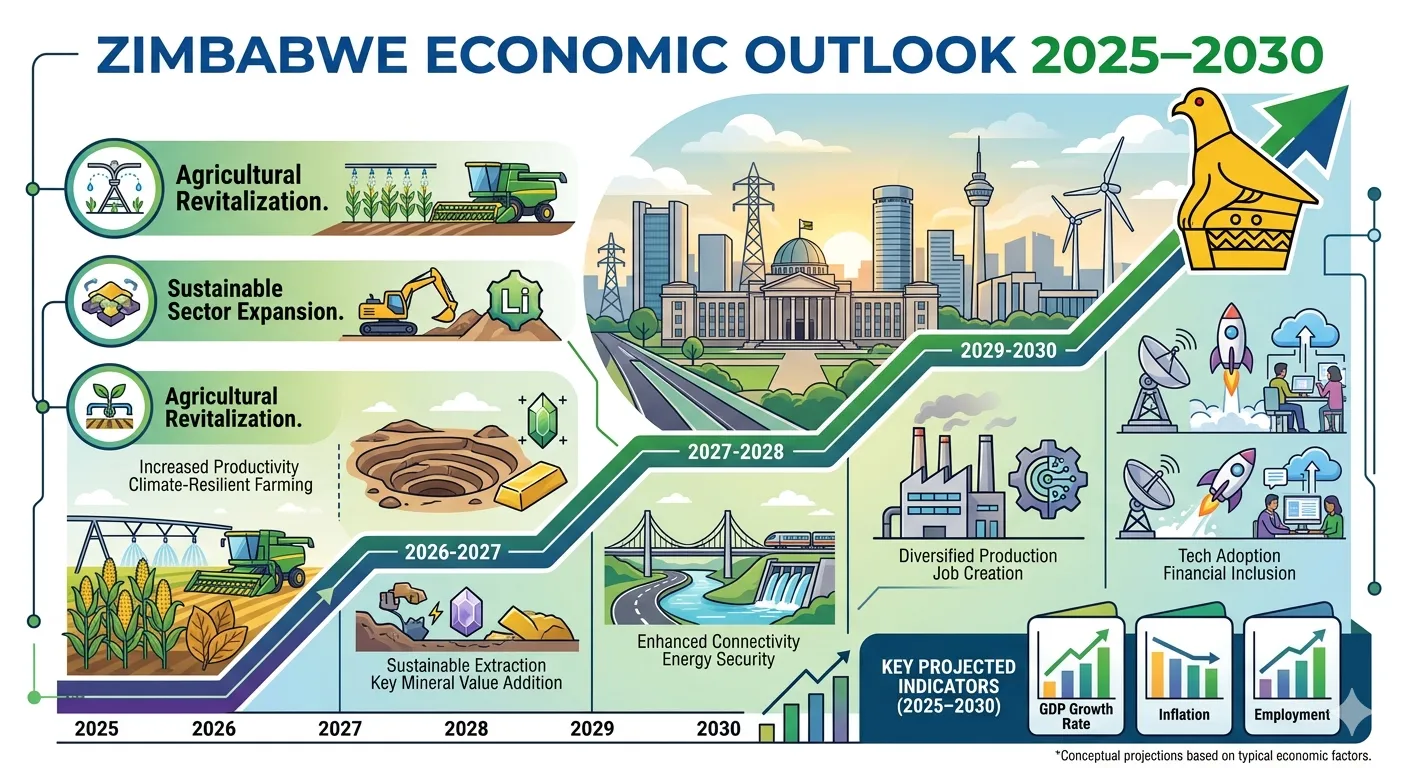
Zimbabwe’s macroeconomic outlook in 2025 reflects a recovering economy with a nominal GDP of approximately $53.3 billion and a growth rate of around 6.0%, largely driven by mining and agriculture. Inflation, though high at approximately 89%, is on a declining trajectory due to ongoing currency stabilization efforts. The labor market remains heavily informal, with over 60% of employment concentrated in the informal sector. By 2030, GDP is projected to reach approximately $63.7 billion with stable growth of around 3.5%.
The economy is anchored in key sectors such as mining, agriculture, and emerging manufacturing industries. Mining dominates exports, particularly gold, which accounts for nearly 45% of export earnings, alongside lithium and nickel—critical resources in global energy transition supply chains. Agriculture remains vital, with tobacco, maize, and horticulture as primary outputs, while construction and manufacturing sectors are gradually expanding.
Zimbabwe’s trade structure reflects an export-oriented economy with total exports estimated at approximately $8.5 billion and imports ranging between $9 to $9.5 billion, resulting in a manageable trade deficit. Major export destinations include China, South Africa, and the UAE, while imports primarily originate from South Africa, China, and Mozambique. Despite a relatively small global trade share of less than 0.05%, Zimbabwe is positioning itself as a regional trade hub within Southern Africa.
Pakistan–Zimbabwe bilateral trade remains modest, estimated between $30 to $50 million. Pakistan’s exports mainly include pharmaceuticals, rice, and textiles, while imports are limited to minerals and tobacco. However, the current trade volume reflects untapped potential rather than structural limitations.
Reflection
Zimbabwe presents a high-risk, high-reward investment landscape for Pakistan. Strategic opportunities exist in mining—particularly lithium for global battery supply chains—agriculture through joint ventures, and infrastructure development driven by rising demand in construction and housing. Additionally, Zimbabwe can serve as a gateway into the Southern African Development Community (SADC) market, offering regional expansion potential.
Pakistan’s businesses can also explore emerging sectors such as digital finance and fintech, where market penetration remains low but growth potential is significant. Early strategic positioning, supported by policy alignment and risk mitigation frameworks, can enable Pakistan to secure long-term economic and geopolitical advantages in the African region.
References
- International Monetary Fund (IMF) – World Economic Outlook Database 2025
- GOV.UK – Zimbabwe Economic Overview
- Zimbabwe National Statistics Agency (ZimStat) – Trade Data 2025
- World Trade Organization (WTO) – Trade Profile Zimbabwe
- Reuters (2025) – Inflation & Export Sector Updates
- Zimbabwe Central Bank – Economic Reports 2025